A $7 million investment from the Australian Government’s Medical Research Future Fund (MRFF) will bring together leading paediatric research networks, hospitals, clinical specialists, families and health-system partners to transform how Australia studies and treats childhood sepsis.
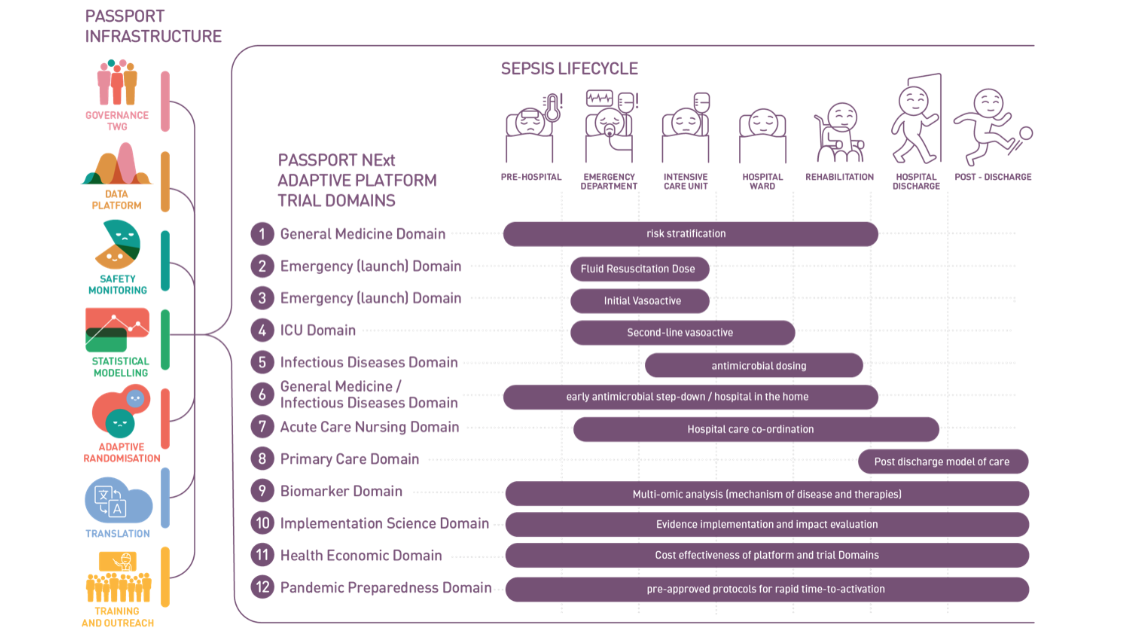
Awarded over seven years, the funding will support PASSPORT NExt (Network Extension), expanding the Paediatric Adaptive Sepsis Platform Trial into a national research‘network of networks’. PASSPORT NExt will support 12 interconnected research domains spanning the child’s entire journey: from early recognition and emergency resuscitation to intensive care, hospitalization, recovery and rehabilitation.
Sepsis is a life-threatening response to infection and a major cause of preventable childhood death. Globally, it affects millions of children each year. For children who survive, the effects may continue long after discharge, affecting health, development and family wellbeing. Yet many everyday treatment decisions still rely on limited evidence.
PASSPORT NExt is designed to bridge research silo’s, bringing together researchers from different specialties and craft groups.
“The real innovation is bringing people together around the patient journey,’ said PASSPORT Chief Investigator Associate Professor Elliot Long. ‘A child with sepsis moves across different healthcare services and specialties, but our research has too often stopped at those boundaries. PASSPORT NExt brings the expertise and networks together to answer connected questions – and to make sure better evidence translates into better care, wherever that child is treated.”

Chief Investigator, Associate Professor Elliot Long
The program is anchored by the Paediatric Research in Emergency Departments International Collaborative (PREDICT), working alongside the Australian and New Zealand Intensive Care Society Paediatric Study Group (ANZICS PSG), the Children’s Inpatient Research Collaborative of Australia and New Zealand (CIRCAN), infectious diseases research collaborators including the Australasian Society for Infectious Diseases (ASID), and hospital-in-the-home research partners.
Importantly, collaboration will extend beyond generating evidence. Partners including the Australian Commission on Safety and Quality in Health Care, Children’s Healthcare Australasia, Sepsis Australia, Advanced Paediatric Life Support, Don’t Forget the Bubbles and professional colleges and clinical networks will help bring findings into national standards, clinical guidelines, education, policy and routine practice. Partners focused on home-based care and implementation will help evaluate how improvements can be delivered across services.
“This funding recognises something much bigger than a single trial or a single institution,” A/Prof Long said. “It reflects years of shared work by researchers, clinicians, consumers and partner organisations. Our ambition is to replace fragmented evidence with a coordinated learning system that follows children from their first signs of illness through to recovery—and improves outcomes for every family affected by sepsis.”