Twenty-four people from seven countries met across two half-day sessions to rank the research questions that matter most in childhood sepsis. The results will be presented at a world congress in Melbourne later this month.
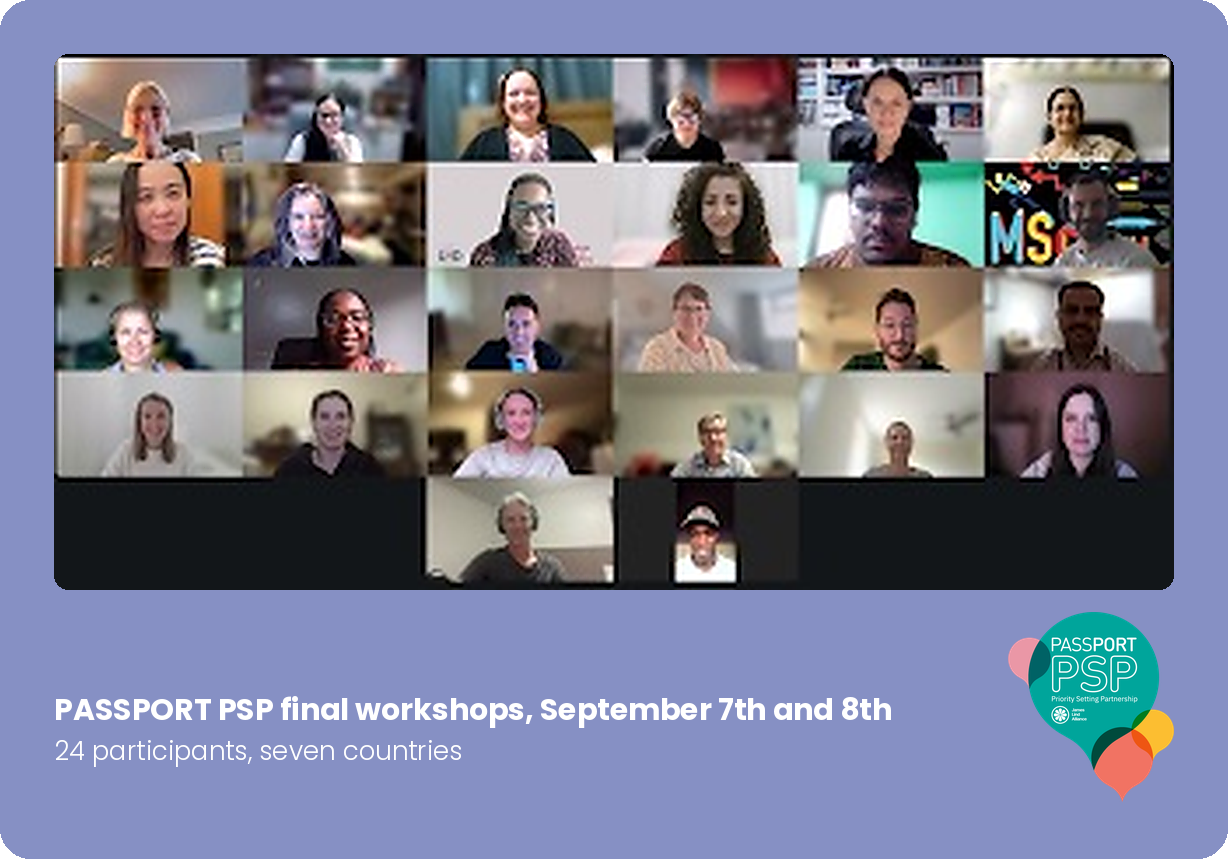
The PASSPORT Priority Setting Partnership held its final workshops online on September 7th and 8th. Participants ranked a shortlist of 20 research questions drawn from earlier surveys, first in small groups and then as one. The result is a Top 20, and within it a Top 10. The questions near the top return to three things that ran through both surveys: recognising sepsis earlier, closing the gap for children furthest from specialist care and post sepsis care recovery and rehabilitation.
Dr Tom Solan, co-clinical lead of the partnership, will present the results at WFPICCS 2026, the World Congress of the World Federation of Pediatric Intensive & Critical Care Societies, held in Melbourne from September 26th to 30th. "Survivors, families and clinicians have told us which ten questions should be answered first," said Dr Solan. "The job from here is putting them in front of the people who fund and design research."
Eleven of the 24 participants were people with lived experience of childhood sepsis, among them parents and carers. The other 13 were clinicians working in research nursing, paediatric emergency medicine, infectious diseases, paediatric immunology, neonatology and clinical nurse consultancy. They joined from Australia, America, Greece, India, Nigeria, France and Britain, and two work as Médecins Sans Frontières paediatricians. Several practise in hospitals that lack the resources most sepsis research takes for granted.
"The range of experience in the room is what the James Lind Alliance (JLA) method is designed to produce, and it is also what made the ranking hard," said Associate Professor Elliot Long, co-clinical lead of the partnership. "The opinions and priorities each participant brought to the workshop were well thought out and represented their own particular background. Reaching a final ranking took a lot of respectful discussion and a lot of compromise, and the JLA facilitators kept those conversations on track."
"Our thanks go to everyone who took part, in the workshops and in the surveys that brought us here," said A/Prof Long.
The full list will be published on the PASSPORT website once the results appear in a peer-reviewed journal.