A landmark moment for paediatric sepsis research.
Last weekend at the Pediatric Academic Societies (PAS) Conference in Boston, A/Prof Elliot Long, lead investigator of the PASSPORT Adaptive Trial, presented results from the PRoMPT BOLUS trial along with the lead investigators, published simultaneously in the New England Journal of Medicine.
PRoMPT BOLUS is the largest trial ever conducted in critically unwell children. This pragmatic trial compared fluid types used for resuscitation in children with septic shock, enrolling more than 9,000 patients across 47 emergency departments in five countries: Australia, New Zealand, the United States, Canada, and Costa Rica. PASSPORT Steering Committee members Amanda Williams and Prof Franz Babl were among the co-authors, and together with A/Prof Elliot Long led the study in Australia and New Zealand.
The trial found no significant difference in the incidence of death, renal-replacement therapy, or persistent kidney dysfunction between balanced fluids and 0.9% saline, definitively answering a question that has long divided clinicians. This landmark study provides clear evidence that will inform the management of children with septic shock globally. It also provides a framework for international collaboration, engagement and inclusivity that will be modelled by PASSPORT.
The presentation took place in a special plenary session and was met with a standing ovation, something rarely witnessed at a scientific meeting of this kind.
As co-author Prof Nathan Kuppermann (US) reflected: "I think the audience appreciated the great collaborative effort between everyone, the engagement with all sites and investigators, the international collaboration as a push back on isolationism, and of course the Herculean scientific efforts."
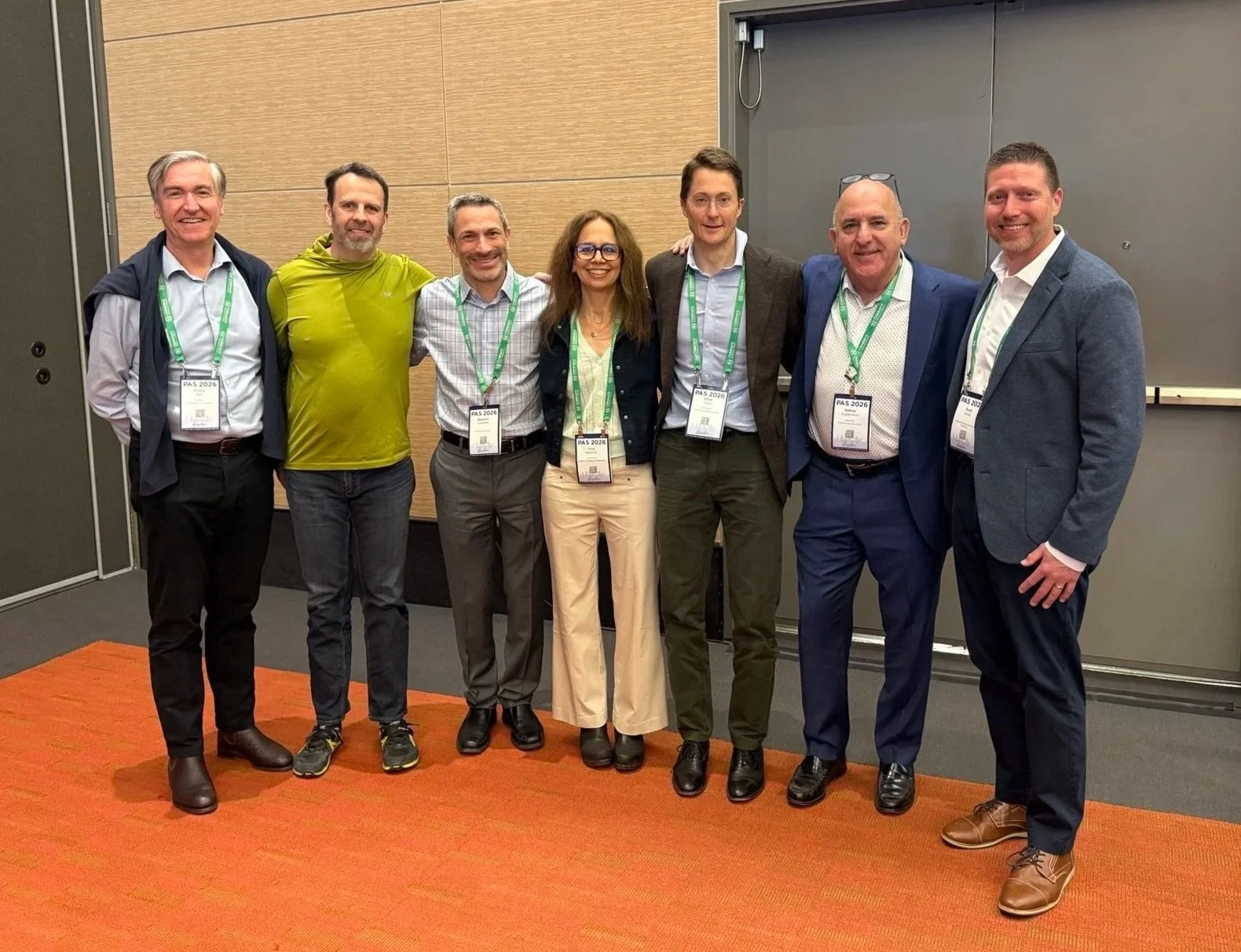
From L to R: Prof Franz Babl, Dr Graham Thompson (Canada), Prof Stephen Freedman (Canada), A/Prof Fran Balamuth (US), A/Prof Elliot Long, Prof Nathan Kuppermann (US), A/Prof Scott Weiss (US).
Congratulations to A/Prof Long, Amanda Williams, Prof Babl and all the investigators and sites across the PECARN, PERC, and PREDICT networks who made this work possible.