Your child and PASSPORT
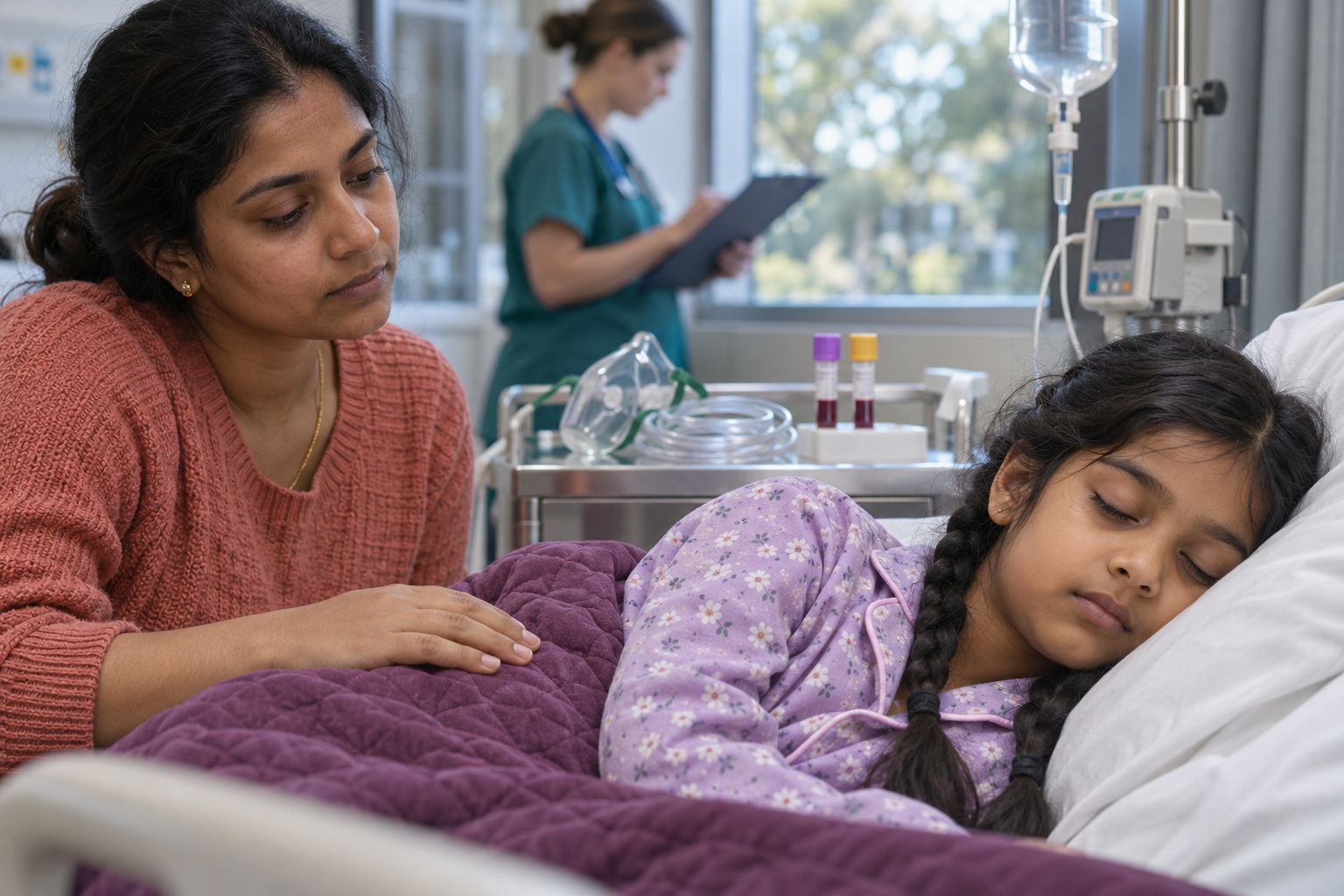
If your child has been treated for sepsis at a hospital taking part in PASSPORT, a member of the research team may talk to you about the study. This page explains what that means.
Watch ‘What is Passport’.
This short animation explains what, why and how we are conducting this study.
Why your child joined before you were asked
Sepsis is an emergency. Treatment must start within minutes, and there is no time to talk through a research study. Parents who helped design PASSPORT told us they would not want to be asked at that moment. So an ethics committee has approved a process in which children join first and families are asked afterwards.
The treatments being compared are already standard care. If your child had not joined PASSPORT, they would still have received one of them.
"There is simply no other way to do the trial." Consumer adviser to PASSPORT [confirm permission]
What happens
Your child's doctors decide that your child needs fluid through a drip, or a medicine to support blood pressure. They make that decision for medical reasons, not for the study.
A computer assigns your child at random, like tossing a coin, to one of two standard options.
Your child's doctors make every other decision about their care. They can change or stop the assigned treatment at any time.
When your child is better, usually after leaving intensive care, a member of the research team explains the study and asks whether your child can continue.
If you agree, we collect information about the hospital stay from your child's medical record. We send you two short surveys of about ten minutes each: one about your child's health before they fell ill, and one about six months later. The surveys also ask about your own wellbeing and any costs to your family.
There are no extra blood tests, scans or procedures.
It is your choice
You can say no, or stop at any time, without giving a reason. Your decision will not affect your child's care. If you stop, we collect no new information but keep what we already have, so that the results stay accurate.
Young people
We give children information suited to their age and ask for their agreement when they are well enough. A young person who turns 18 during the study is asked to give their own consent.
Help with language
Accredited interpreters are available at every hospital.
Your rights
Australia's Charter of Healthcare Rights sets out what you can expect when your child takes part in a trial. Read more on the Melbourne Children's Trial Centre website.
Hear about the results
Would you like to hear what PASSPORT finds? Sign up below and we will send you a plain-language summary when each study's results are ready. This is separate from your consent, and you can unsubscribe at any time.
Join the families & community mailing list to stay informed about this research here.
Some Frequently Asked Questions about our studies.
-
Sepsis occurs when the body's response to an infection damages its own organs. It is a medical emergency that needs urgent treatment.
-
PASSPORT is an international study that compares treatments already used in hospitals, to find which work best for children with sepsis.
-
Treatment for sepsis cannot wait. An ethics committee approved enrolling children first and asking families as soon as the child is well enough. Both treatments being compared are standard care.
-
No. Hospitals already use both options in each study. Nobody yet knows which is better, which is why we are comparing them.
-
Only in one way: chance, not the doctor's preference, decides which of two standard treatments your child receives first. Doctors make all other decisions and can change the treatment at any time.
-
No. We use information that the hospital already records.
-
Complete two short surveys, one in hospital and one about six months later. Each takes about ten minutes.
-
Yes, at any time and without giving a reason. Tell the research team at your hospital.
-
We keep it, so that the results are accurate. It never identifies your child.
-
A member of the research team will phone you. If they cannot reach you, they will send a letter that explains the study and how to say no.
-
We will wait until your child's doctors say it is a good time before we talk to you.
-
We are deeply sorry. We will not contact you to ask about the study. With ethics approval, we use de-identified information from your child's medical record, so that the results reflect every child. You can still contact us at any time.
-
Yes. When each study ends, we publish a plain-language summary on this website. Results cover all children together, not individual children. Sign up to receive the summary by email. [link to the family sign-up form]
-
The Royal Children's Hospital Human Research Ethics Committee.
-
The research team at your hospital, or the PASSPORT team at hello@passport-platform.org.
Some Key Terms you may like to better understand around sepsis treatment and research
-
A single, long-running trial that tests several treatments at once and adds new questions over time.
-
A medicine that mainly makes the heart pump harder.
-
A child's agreement to take part, alongside their parent's consent.
-
Permission a family gives after their child has joined, so that the child stays in the study.
-
Independent experts who review results during the trial and can recommend stopping or changing a study.
-
Information with names and other personal details removed
-
One study within PASSPORT, which asks one question.
-
An independent group that checks research is safe and fair before it starts.
-
A set amount of fluid given quickly through a drip.
-
A hospital ward for children who need close monitoring and organ support.
-
A medicine that mainly tightens blood vessels to raise blood pressure.
-
Using chance, like tossing a coin, to decide which treatment a child receives.
-
A life-threatening reaction to infection that damages the body's organs.
-
Sepsis in which blood pressure or blood flow stays dangerously low.
-
Treatment that hospitals already use.
-
A medicine that supports blood pressure and circulation.
-
Ethics approval to include a child, or use their information, before or without asking the family.